Clutter can easily take over our homes, turning spaces that should be comforting into chaotic environments.
Tackling this issue doesn’t have to be overwhelming. This article offers ten practical tips to help you declutter effectively and create a more organised living space.
- Establish a solid plan.
- Sort through your belongings.
- Utilise smart storage solutions.
- Digitise important documents.
These strategies will give you the power to reclaim your home. Discover how to simplify your life and embrace a tidier, more functional space!
The Importance of Decluttering
Decluttering is a game changer that can transform your living space into a clean, organised home free from the stress of clutter. When you declutter, you’re not just tidying up; you’re creating a clutter-free environment that boosts your mental clarity and emotional well-being.
Embracing minimalism helps you focus on what matters, simplifying life and enhancing the organisation of your home. Remember, the decluttering journey isn’t just about throwing out unwanted items; it’s about creating a peaceful, intentional space that reflects your values.
Tip #1: Start with a Plan
Creating a successful decluttering strategy starts with a solid plan—it’s your roadmap to an organised and efficient living space. Begin by pinpointing the areas that need a little TLC and setting clear goals for each tidying session. This way, you can allocate your time effectively and boost your productivity. Throw in some organising tips; you’ll find it even easier to manage your space and keep the whole family organised.
To make the process more structured, break tasks down into manageable sections. Focus on one room or category at a time. You might want to set specific timelines for each task—maybe dedicate one weekend to your bedroom and another to the garage. This approach makes everything feel less overwhelming and allows you to progress gradually without disrupting family life.
Using checklists can be a game-changer to track what you’ve accomplished and what still needs attention. It’s a great way to celebrate your achievements as you move closer to your decluttering goals. Just remember, effective time management is crucial. Pick times when the household is quieter to dive into your cleaning routines, keeping the peace and harmony in your family organisation.
Tip #2: Sort Through Your Belongings
Sorting through your belongings is a critical step in the decluttering process. It helps you determine what to keep or discard while creating functional spaces in your home. Start by grouping your household items into categories such as essentials, sentimental pieces, and those unwanted items that no longer serve a purpose in your life. This approach helps you downsize and sets the stage for a more organised and efficient home.
Strategies like the “keep, discard, donate” method can simplify things for you. Considerating your emotional attachment to each item is essential, as that can make decision-making a bit tricky. For those sentimental items, consider making a memory box or taking photographs to preserve the memories without cluttering your space. Some keepsakes are more valuable in memory than physical form, making it easier to let go of things that weigh you down.
Involve your family members in the process; their perspectives can offer clarity and make the sentimental sorting feel less overwhelming.
Tip #3: Utilise Storage Solutions
To keep your space looking tidy, it is crucial to use effective storage solutions that help you optimise space and ensure everything is stored efficiently throughout your home.
One of the best options available is modular shelving systems. They are customisable and stylish, adapting perfectly to any room’s dimensions while helping you say goodbye to unnecessary clutter.
Do not underestimate the power of bins and baskets, especially when labelled. They make it easy to find what you need quickly, contributing to a smooth and visually appealing organisation system.
Let us not forget about under-bed storage! It is a practical choice that maximises those often overlooked spaces for stashing seasonal clothing or extra linens. By incorporating these versatile storage solutions, you can tackle your clutter and elevate your home’s aesthetics, creating a serene and inviting atmosphere that truly reflects your personal style.
Tip #4: Create a Cleaning Routine
A consistent cleaning routine is key to keeping your space decluttered and organised. Think of tidying up as part of your daily habits. Design a tidying schedule with specific daily tasks and ensure family activities align with your cleaning goals. This proactive approach to time management not only lightens the load of cleaning but also fosters a sense of teamwork and responsibility among everyone in the household.
Consider breaking your tasks into daily, weekly, and monthly segments to create an effective cleaning routine. For example, daily chores could include laundry or washing up, while weekly tasks might involve hoovering or scrubbing the bathroom. This way, everyone can pitch in according to their strengths. Monthly tasks can be dedicated to deep cleaning or organising specific areas, ensuring that nothing falls through the cracks over time.
Encourage your family members to personalise their contributions by rotating responsibilities. This makes chores more engaging and helps everyone feel a sense of ownership in keeping the place tidy, leading to sustainable cleaning habits for the whole household.

Tip #5: Get Rid of Duplicates
One effective strategy for tackling clutter is to identify and eliminate duplicates among your household items so that you can focus on quality over quantity. Look at your belongings and ask yourself if you need multiple items that serve the same purpose.
Using the ‘keep or discard’ method, you can make smart decisions about what to keep, helping you create a more streamlined and reduced living space.
This thorough assessment prompts you to evaluate your lifestyle needs, which can influence your decision-making process. Think about how often you use each item—are you constantly reaching for two similar kitchen gadgets, or are they just gathering dust? Keeping a list of your belongings can help you visualise which items add value and contribute to the clutter.
By adopting a mindful approach, you can cultivate a sense of organisation and clarity, making it easier to keep only what truly enhances your environment.
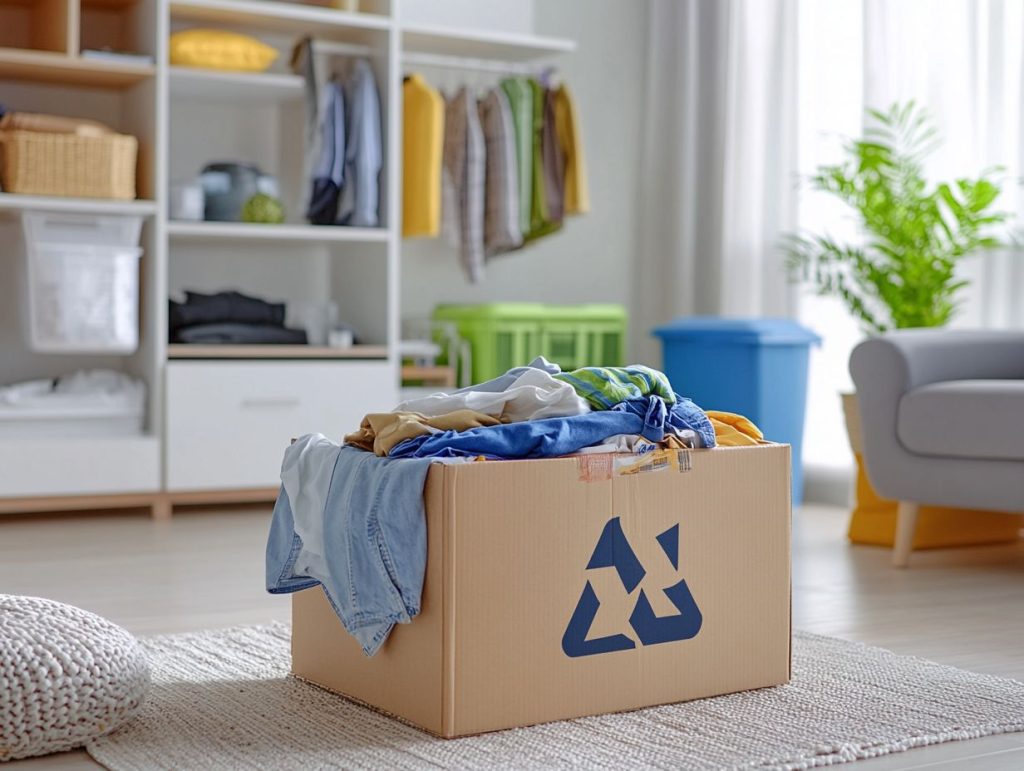
Tip #6: Donate or Recycle Unwanted Items
After you’ve sorted through your belongings, it’s time to decide what to do with those unwanted items. Donating or recycling them benefits the environment and others in your community.
Getting involved in this process doesn’t just clear out your space; it also helps you feel more connected to those around you. Many local charities make it easy with convenient drop-off points or even scheduled collection services, so you can donate clothes, furniture, and household items to people who need them.
You can usually find recycling facilities through your city’s website or apps, which guide you on the best ways to dispose of things properly. By donating or recycling, you’re actively participating in eco-friendly practices that reduce landfill waste, support local economies, and help build a more sustainable community overall.
Tip #7: Set Limits for New Purchases
To keep your space decluttered, it’s crucial to set some boundaries around new purchases and embrace a mindset of minimalism and intentional living. Before you bring home that new item, consider whether it serves a purpose in your life and how it fits into your goals for managing clutter. Establishing limits and being mindful of your shopping habits can reduce waste and create a more organised environment.
This reflective approach invites you to examine your needs and desires more closely. Instead of giving in to impulse buys spurred by marketing hype or fleeting trends, evaluating each potential purchase allows you to align more closely with your values.
It can also help to incorporate some budgeting techniques. This way, you can prioritise your essential expenses over the non-essentials and reinforce the habit of intentional consumption. By thoughtfully curating what comes into your living space, you’re not just decluttering physically but also nurturing a healthier mental space supporting a simplified lifestyle.
Tip #8: Digitise Paperwork and Photos
Digital decluttering is your secret weapon for minimising physical clutter, especially when it comes to all that paperwork and those photos that seem to multiply overnight. By digitising these items, you can free up valuable space while keeping those important memories and documents safe.
Take the time to organise your digital files efficiently. This will help you find what you need easily and contribute to a clutter-free living space.
Switching to a digital format comes with various perks, such as searching for things quickly, effortlessly sharing files with friends or family, and protecting precious documents from physical damage. To maximise these benefits, you’ll want to set up a clear filing system that makes sense.
Remember to use cloud storage tools and dedicated software to help you manage your space and back things up efficiently. Reviewing your digital files regularly is also an excellent way to prevent them from becoming chaotic over time.
And if you’re looking for extra help, exploring resources like file organisation apps can be a game-changer for creating a tidy digital landscape. Ultimately, it’s all about finding that sweet spot between physical space and digital freedom, giving you a more serene living environment.
Tip #9: Regularly Declutter and Reassess
Regularly decluttering and reassessing your space is essential for keeping your home clean and organised. It helps you adapt to changing family dynamics and evolving needs. You might want to schedule seasonal cleaning sessions to check through your belongings and ensure you’re not letting clutter pile up over time.
Having a consistent decluttering routine doesn’t just clear out physical clutter; it also boosts your mental clarity, making it easier to navigate daily life. Consider setting aside specific times each week to tackle those areas that tend to get messy, like worktops or cupboards.
Take a moment to reflect on which items truly serve a purpose in your life. Emotional attachments to certain things can lead to unnecessary accumulation, so it’s crucial to approach this practice with a proactive mindset.
Keeping your environment organised doesn’t just make it look better; it also demonstrates your commitment to a harmonious living space, allowing you to enjoy your home to the fullest.
Tip #10: Seek Professional Help if Needed
If you’re overwhelmed by clutter and don’t know where to begin, reaching out to a professional organiser can be a game changer for managing that mess. These experts can provide practical solutions tailored just for you, helping you deal with any emotional attachment to your belongings while making your home more efficient.
Working with a professional can transform your space and make decluttering more manageable and enjoyable.
With their extensive knowledge and experience, organisers understand that psychological barriers are often tied to clutter. They don’t just tackle the physical mess; they help restore emotional balance, too.
When looking for the right professional, consider how they approach the organisation, their communication style, and whether their methods fit your vision.
You can expect personalised consultations, actionable plans, and hands-on support as you team up to create a harmonious living space. In the end, having a neatly organised home can bring you peace of mind and significantly boost your quality of life, allowing you to focus on what truly matters.